- Develop critical thinking and problem-solving skills to analyse, question, and adapt confidently in a complex, fast-changing world.
- Foster communication and collaboration abilities to express ideas clearly, listen actively, and work respectfully with diverse groups.
- Build digital literacy and responsible technology use to navigate online safety, misinformation, and ethical digital behaviour.
Key Takeaways
- Academic knowledge alone is no longer enough to prepare children for an increasingly complex and fast-changing world.
- Nurturing skills that are relevant in the 21st century helps students become more confident, adaptable, and capable in real-life situations.
- Communication, collaboration, and critical thinking skills are crucial for both academic growth and emotional development.
- Digital literacy in children and responsible technology use are becoming essential in today’s world.
- Private international schools in Singapore that combine inquiry-driven learning with real-world experiences can better prepare students for future challenges.
Introduction
As parents, many of us naturally focus on helping our children do well academically. Strong literacy, numeracy, and subject knowledge remain important foundations for success. However, the world our children are growing up in looks very different from the one many adults experienced during their own school years.
Technology is evolving rapidly, information is constantly changing, and children today are growing up in a highly connected world. Beyond grades and examinations, students now need to develop the ability to think independently, communicate clearly, adapt to change, and work effectively with others. These skills help children navigate not only future careers, but also everyday relationships, decision-making, and personal growth.
Below, we break down the essential skills that students of the 21st century must learn and master.
4 Key Skills That Students of Today Need to Learn
1. Critical Thinking and Problem Solving
Critical thinking is perhaps one of the most important skills for students to develop in the 21st century. As the world becomes increasingly complex and fast-moving, children need to learn how to analyse situations carefully, think independently, and approach challenges with confidence.
Strong critical thinking skills help students question assumptions, evaluate different perspectives, and make informed decisions. At the same time, problem-solving teaches children how to break down complex situations, explore possible solutions, and think creatively when faced with obstacles.
Instead of accepting ideas or answers at face value, children learn to ask meaningful questions such as:
- Is this the best solution?
- What evidence supports this conclusion?
- Are there alternative perspectives to consider?
- What might happen if we approach this differently?
These skills help students become more thoughtful, independent, and adaptable individuals both inside and outside the classroom. They also encourage curiosity and confidence, which are increasingly important in a rapidly evolving world.
2. Communication and Collaboration
Good communication extends far beyond speaking confidently in front of a classroom. Children must learn how to express ideas clearly, listen actively, and engage respectfully with others from a young age.
Moreover, in today’s interconnected environment, they must also learn how to adapt their communication styles across different settings and audiences. For example, communicating with teachers, peers, family members, and online communities often requires different levels of awareness and sensitivity.
Through discussions, collaborative projects, and shared learning experiences, children learn how to balance leadership with cooperation, navigate differences in opinions, and work towards common goals. These experiences also help them develop empathy, adaptability, and respect for different perspectives and working styles in the future.
3. Digital Literacy and Technological Awareness
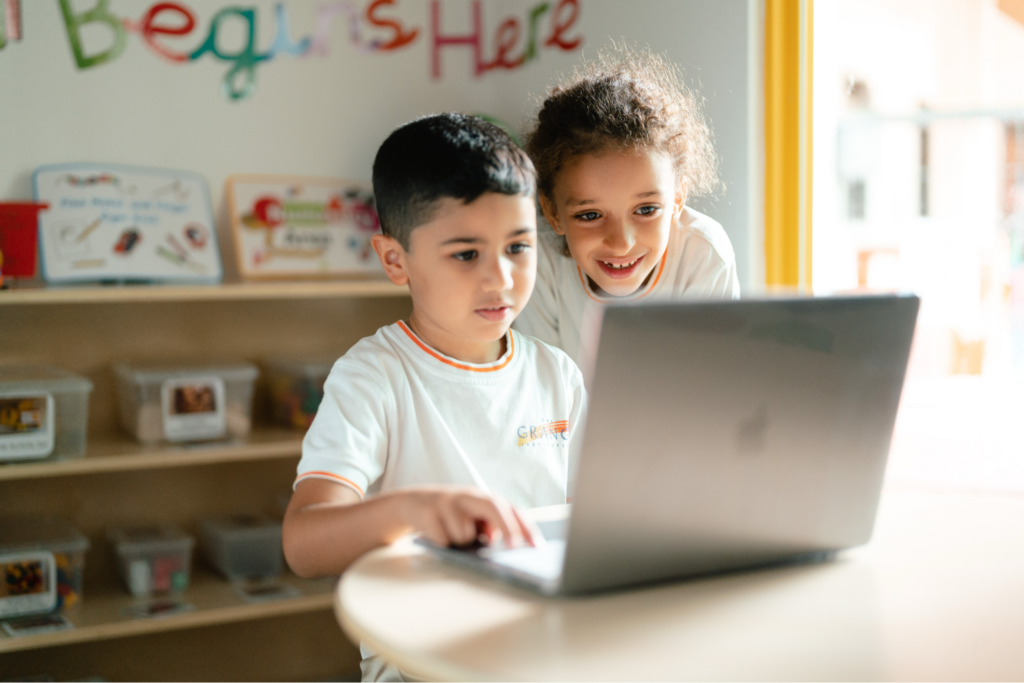
Technology is now deeply integrated into how children learn, communicate, and interact with the world around them. As a result, digital literacy has become an increasingly important part of education. This isn’t just about knowing how to use devices or applications but also about knowing how to navigate online spaces responsibly and critically.
Students today need guidance in areas such as:
- Evaluating online information accurately
- Identifying misinformation and unreliable sources
- Understanding online safety and privacy
- Managing digital footprints responsibly
- Using technology ethically and respectfully
With artificial intelligence (AI) and digital platforms becoming a part of our daily lives, it’s important to choose an international primary school that helps students develop the skills needed to navigate the 21st century safely and confidently.
4. Adaptability and Lifelong Learning
Adaptability allows individuals to adjust to change, learn continuously, and remain open to new experiences. This will shape how your children navigate both future careers and personal challenges.
Industries are evolving rapidly, and many future roles may require skills that are still emerging. In today’s world, people can no longer rely solely on what they learned once in school or university. To stay relevant and competitive, individuals must be willing to continuously learn, unlearn, and adapt as industries, technologies, and ways of working continue to change.
Developing adaptability from a young age helps children become more comfortable with uncertainty and better prepared to embrace new opportunities, challenges, and environments throughout life. It also encourages curiosity, independence, and a growth mindset, all of which are increasingly valuable in a fast-changing world.
How The Grange Institution Nurtures 21st Century Learners
Developing strong academic foundations remains important, but children also need opportunities to build confidence, adaptability, communication skills, and independent thinking through meaningful real-world experiences.
At The Grange Institution, learning is designed to nurture these essential skills through inquiry-driven education and the school’s proprietary Cre8tors-in-Action© framework. Rather than focusing solely on memorisation or standardised outcomes, students are encouraged to ask questions, think critically, collaborate with others, and reflect on their learning experiences.
The school integrates eight core competencies into everyday learning, including: design thinking, environmental stewardship, entrepreneurship, teamwork, and service leadership. Through interdisciplinary projects and collaborative activities, students learn how to solve problems creatively, communicate thoughtfully, and apply their knowledge in meaningful ways.
Technology and digital literacy are also embedded into the curriculum progressively across different year levels. Our students will be taught how to use digital tools purposefully for research, communication, coding, data analysis, and presentations, while also developing awareness of internet safety, cyber etiquette, and responsible online behaviour.
Importantly, The Grange Institution places strong emphasis on nurturing curiosity, resilience, and adaptability. We encourage students to view challenges as part of the learning process, helping them become more confident and open-minded learners who are better prepared for an increasingly interconnected and rapidly evolving world.
Conclusion
Education today is no longer solely about memorising information or achieving strong examination results. It’s more important than ever for students to develop skills that are relevant to the unique challenges of the 21st century.
The Grange Institution, an affordable international school in Singapore, takes a unique approach to nurturing these qualities alongside core academic skills. If you have any questions or concerns about our curriculum, feel free to contact us and speak to the team today.